Traffic and demand, no grid
The busiest corridors are often the grid's blind spots. A high-voltage line costs tens of millions, approval takes years, and in many regions it is simply not feasible.
Remote mines, island resorts, temporary camps, and underdeveloped intercity highways concentrate power demand where the grid is hardest to reach.
The busiest corridors are often the grid's blind spots. A high-voltage line costs tens of millions, approval takes years, and in many regions it is simply not feasible.
Diesel generation costs far more than grid power. Large stations need multiple big generators in parallel; the cost model simply does not work.
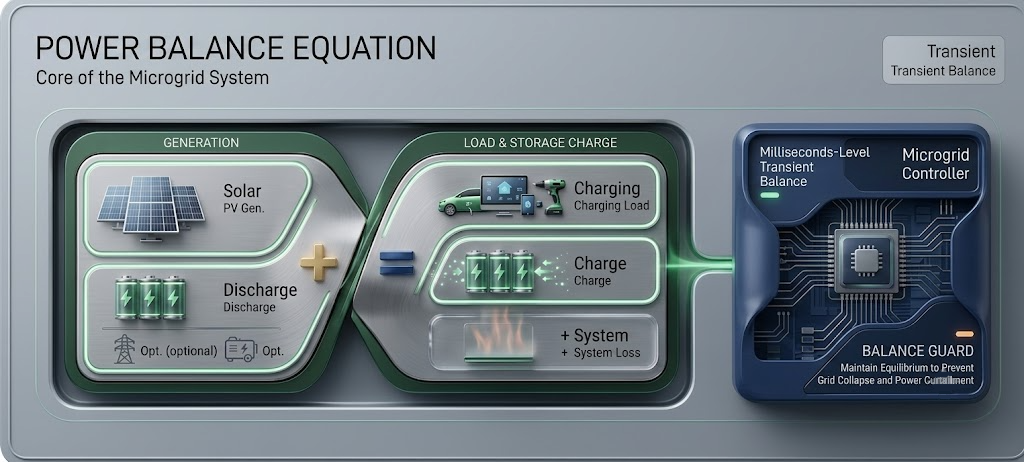
No big grid as a backstop. A passing cloud cuts solar output by hundreds of kW; multiple vehicles plugging in can spike demand in seconds. Generation must equal consumption at every instant.
Diesel solves "is there power", not "can you afford it". Building lines solves "capacity", not "time and investment".
Low upfront cost, but operating costs are extreme. Fuel, transport, and maintenance devour margins, and scaled stations break the cost model entirely.
Transmission lines, transformers, and charging equipment. Extreme upfront cost, 1-3 years to build, and infeasible in most remote regions.
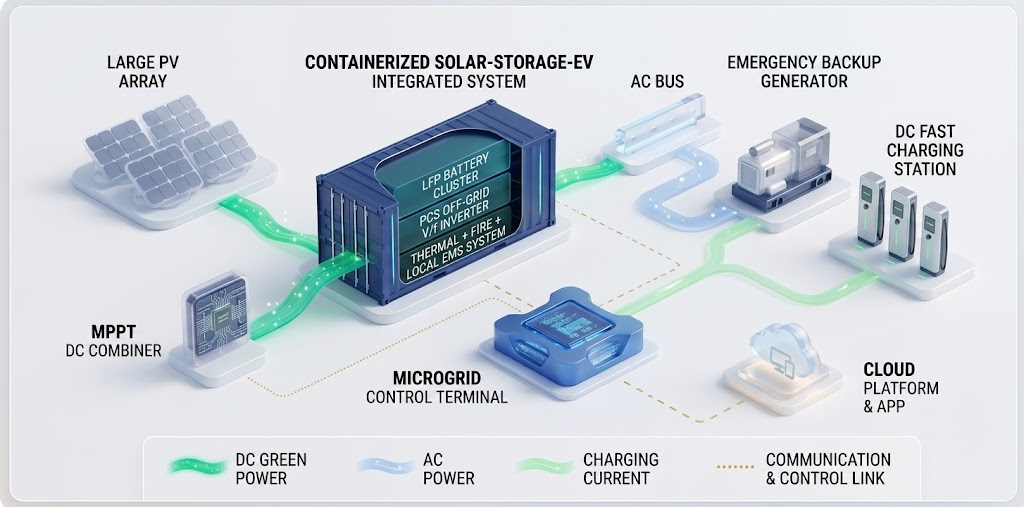
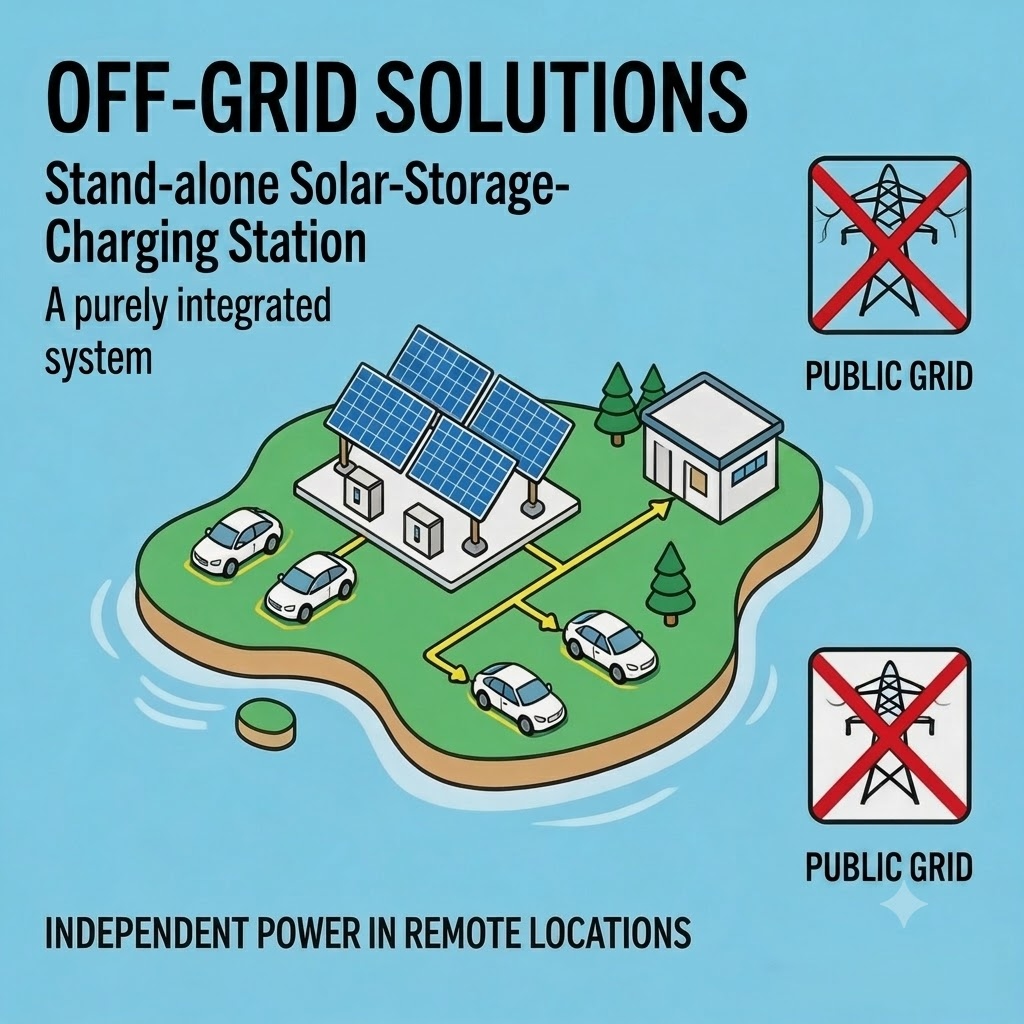
The real answer: don't wait for the grid. Build a "micro power system" on site, with solar generating, storage buffering, and microgrid control dispatching.
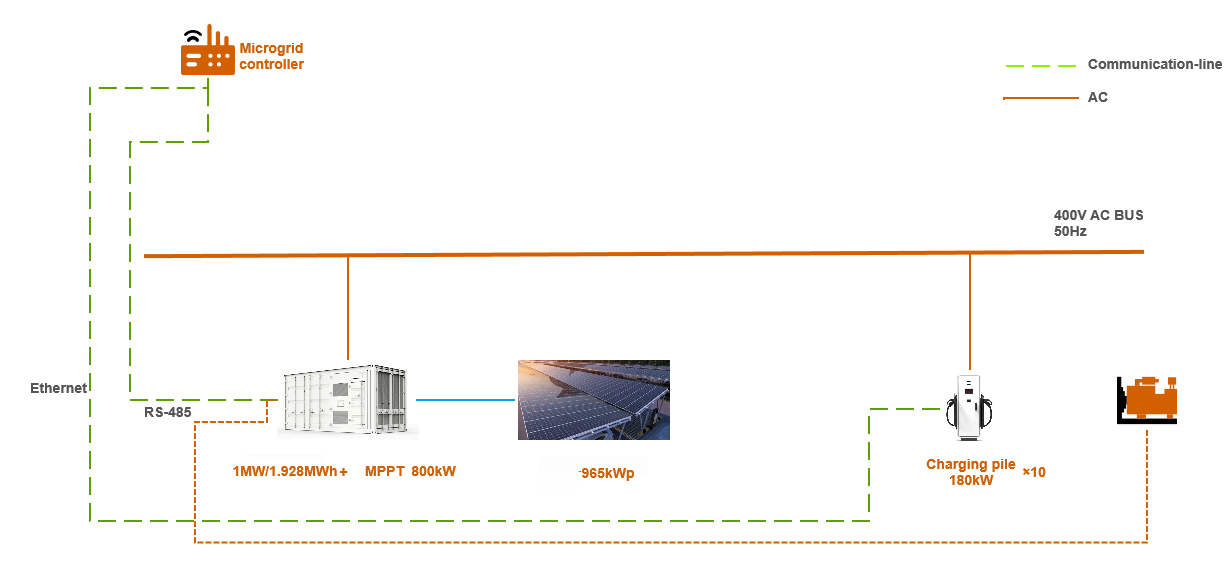
Large-scale solar as the energy source, high-capacity storage for buffering and power support, and microgrid control for instant balance. Three in synergy, running independently.
Large-scale solar arrays as the only daily energy source, sized to cover daily charging demand with margin. Diesel only for prolonged cloudy periods.
High-capacity storage for energy buffering and power support. Capacity is set by the longest no-sun window; power by simultaneous maximum charger demand.
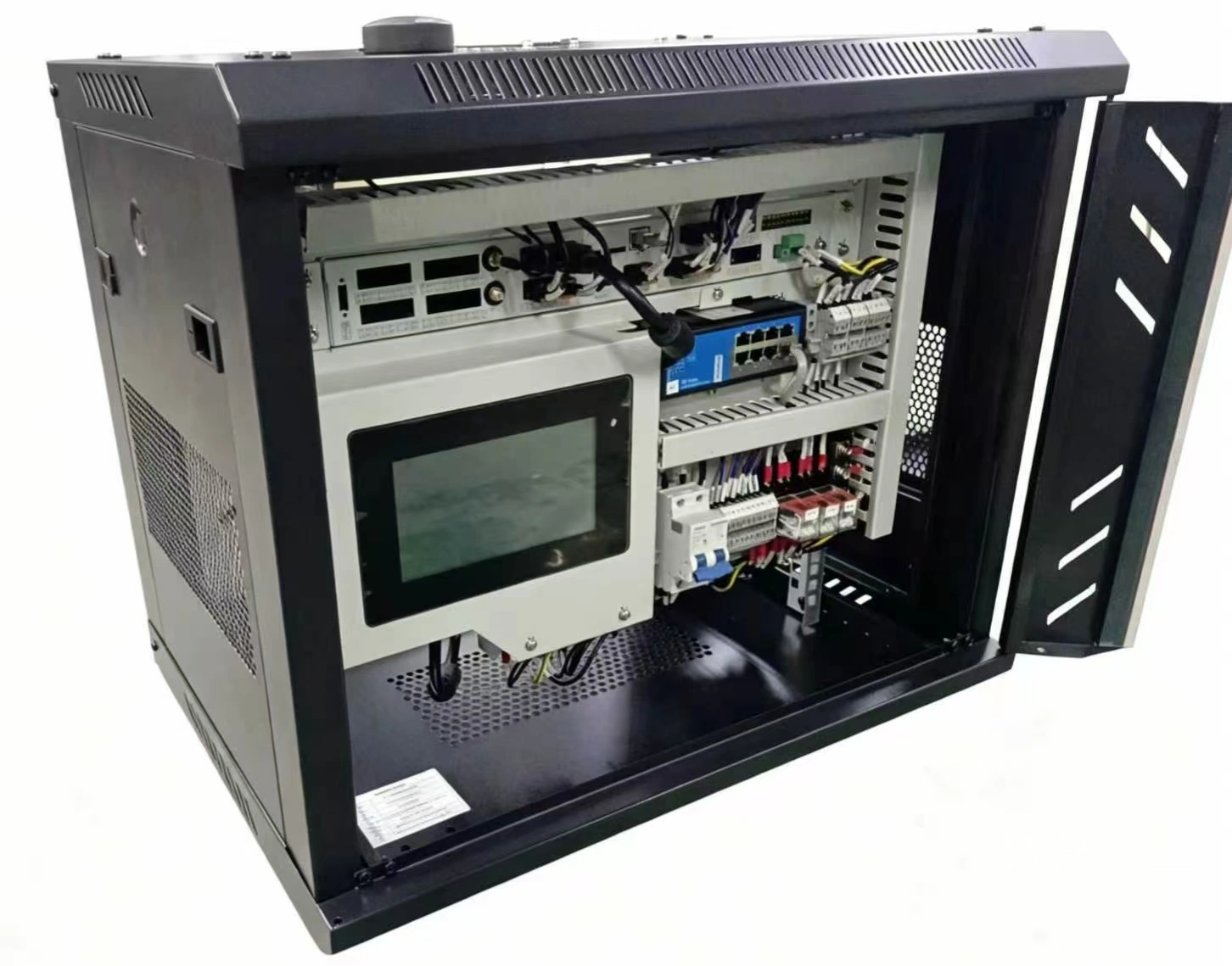
The microgrid controller balances solar, storage, and load in real time. Power is cut instantly on solar drops; SOC-tiered protection prevents over-discharge collapse.
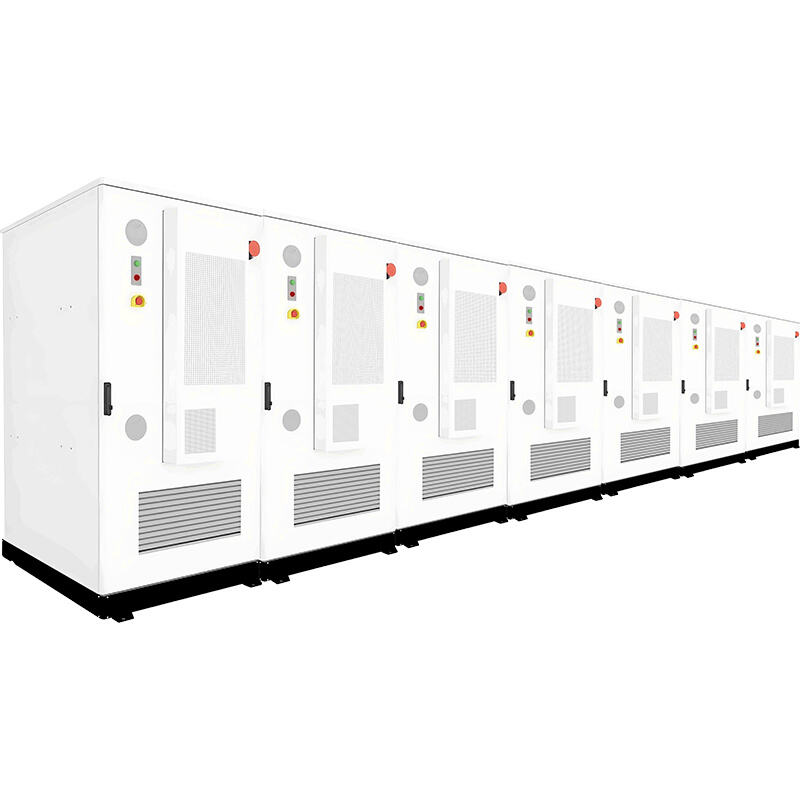
Battery clusters, PCS, and MPPT fully integrated in a standard container. Pre-assembled and pre-tested at the factory; plug in solar and charging lines on site and power up.
Pre-assembled and tested at the factory. On site: connect solar lines, output to chargers, ground, and power up. PCS supports V/f off-grid mode.
Maintains frequency and voltage of the whole microgrid independently, with no big grid as reference. Island stability, coordinated dispatch, SOC-tiered protection.
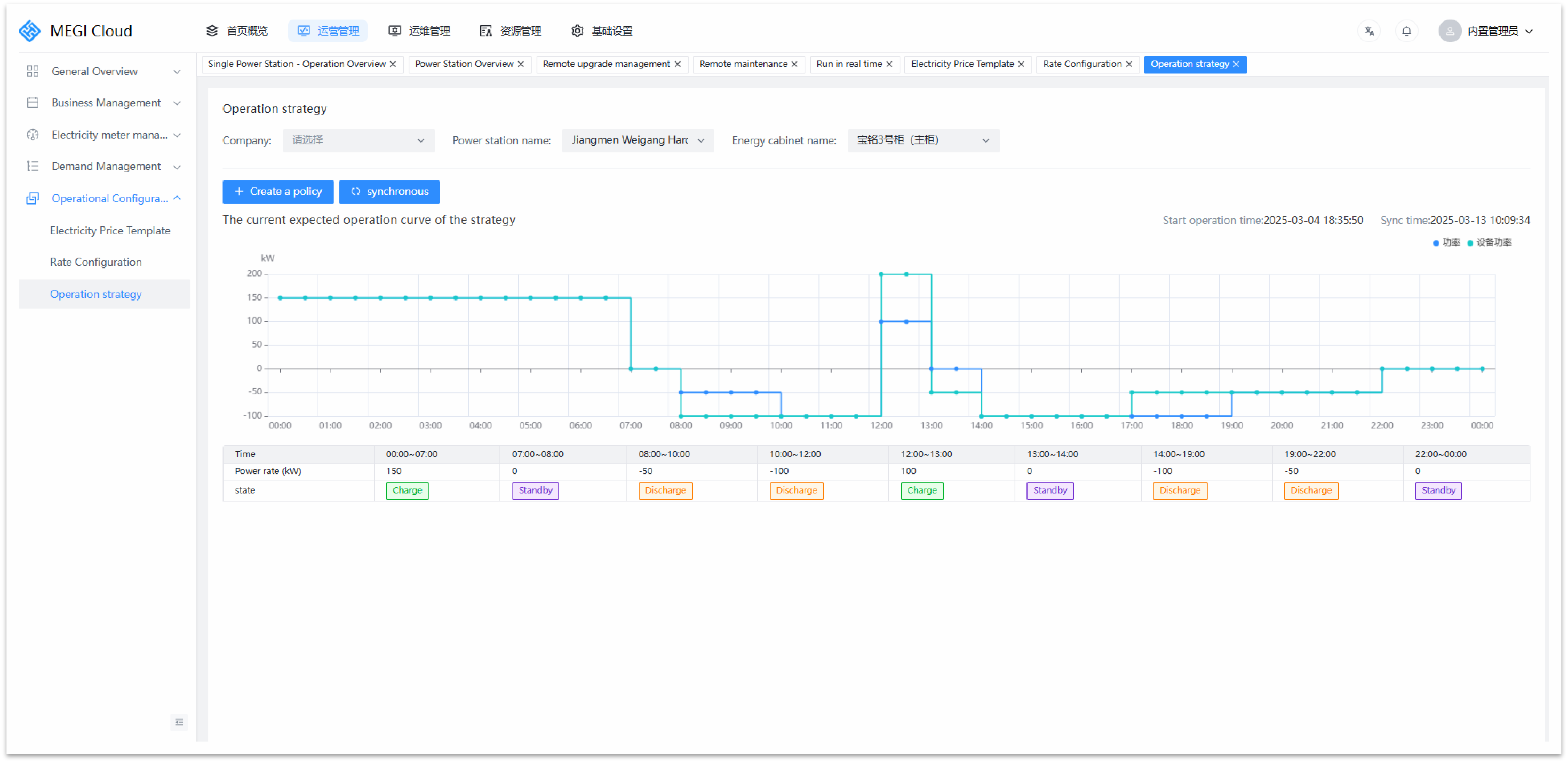
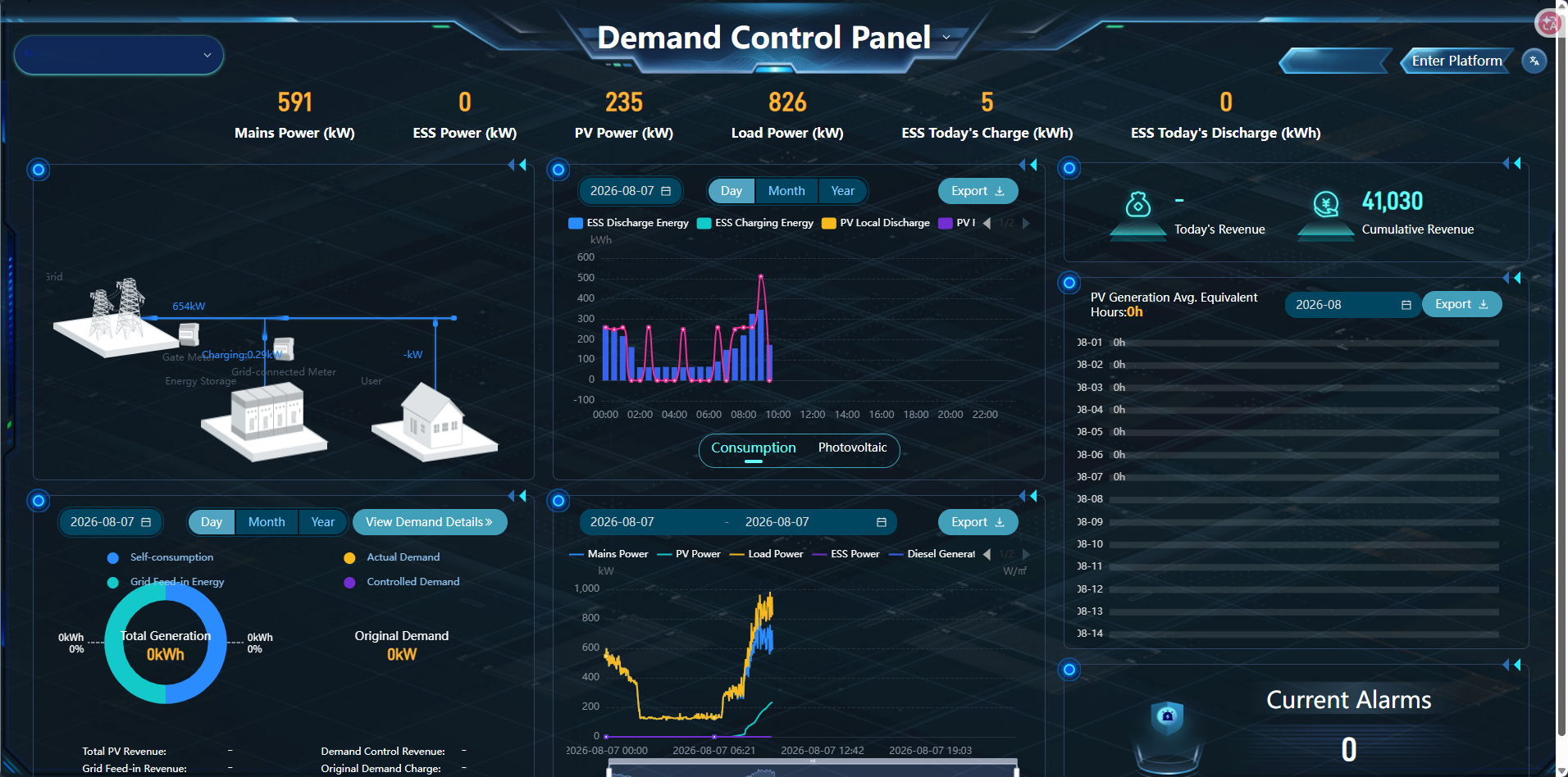
Real-time monitoring of generation, SOC, and charging. Remote sites make monitoring and alert push especially critical.
From site selection and solar resource assessment to a 72-hour trial run. Modular design supports phased expansion as traffic grows.
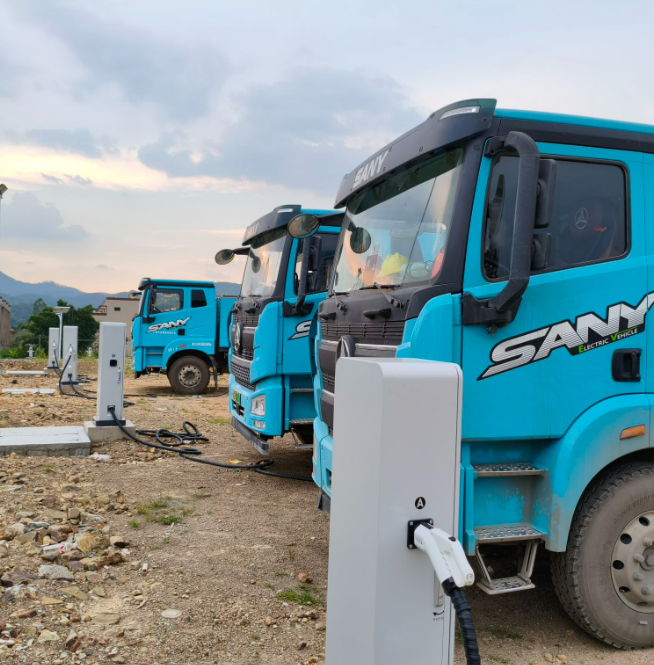
The benchmark case of a purely off-grid large-scale solar-storage charging station. A 1000kW/1928kWh container plus 960kWp solar, running independently with no grid.
Tell us about your grid capacity, charging goals, or scenario. We will recommend the optimal solar / storage / charging configuration — tailored, no obligation.