Half an hour of peak, a month of bills
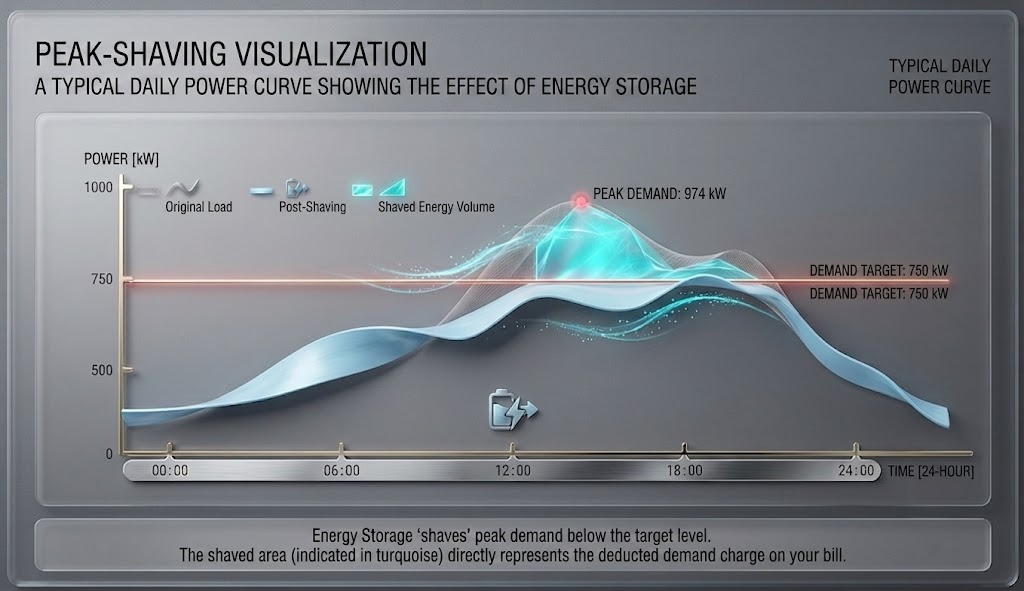
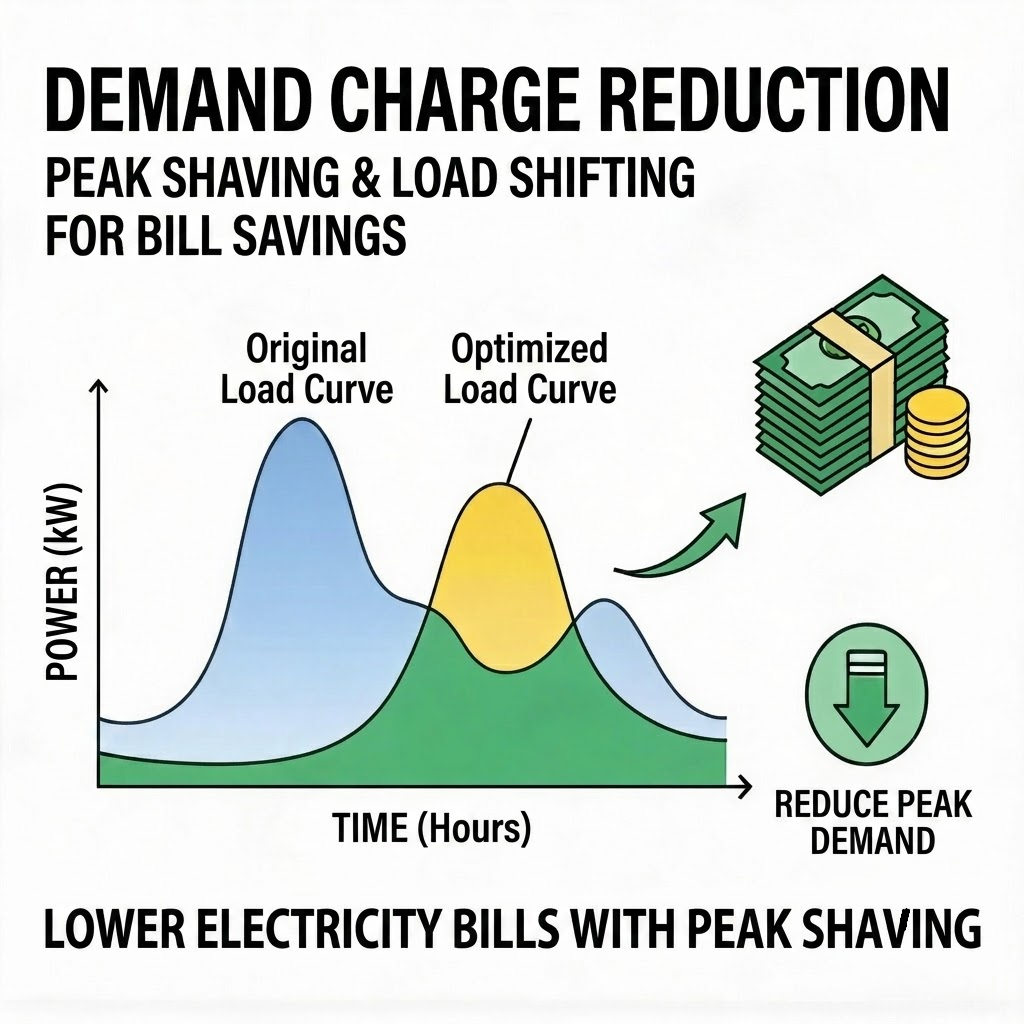
In a 720-hour month, one half-hour spike sets the demand charge for the entire month. Most hours run far below the peak.
Demand charges are billed on the maximum power draw of the billing period. A peak that appears for half an hour decides the whole month's bill.
In a 720-hour month, one half-hour spike sets the demand charge for the entire month. Most hours run far below the peak.
Order pressure means lines cannot stop and equipment cannot be power-limited. Large equipment start-stop surges hit multiples of steady state.
Expansion costs more and raises the base; manual monitoring is slow and disrupts production; ignoring it lets profits erode.
Expanding capacity or cutting load by hand never truly flattens the peak. The factory still pays for that half hour.
Large one-time investment, long approval cycles. And a higher contract capacity means a larger demand rate base.
Human response cannot keep up with power swings, and it disrupts production continuity. Not sustainable.
The real answer: use storage to "flatten" the grid-side peak, while the factory's internal production rhythm stays completely untouched.
The EMS monitors gateway power every second, discharges precisely when a peak threatens the threshold, and recharges in safe windows. Zero production impact.
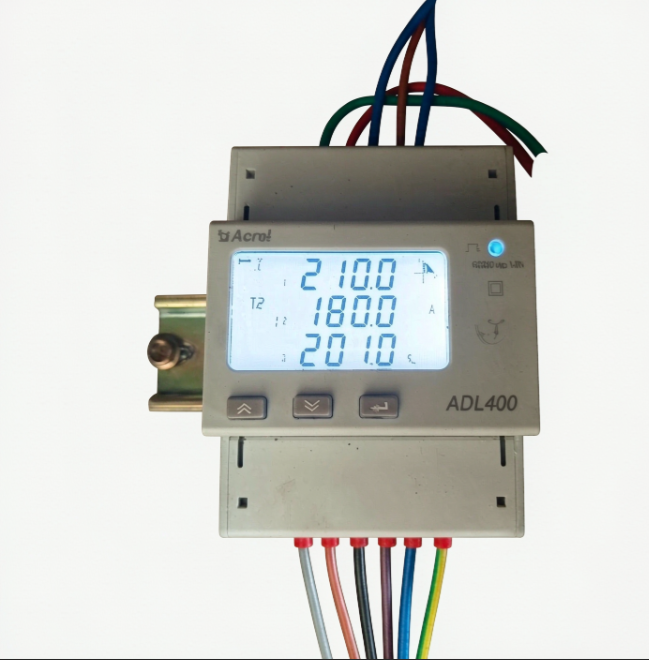
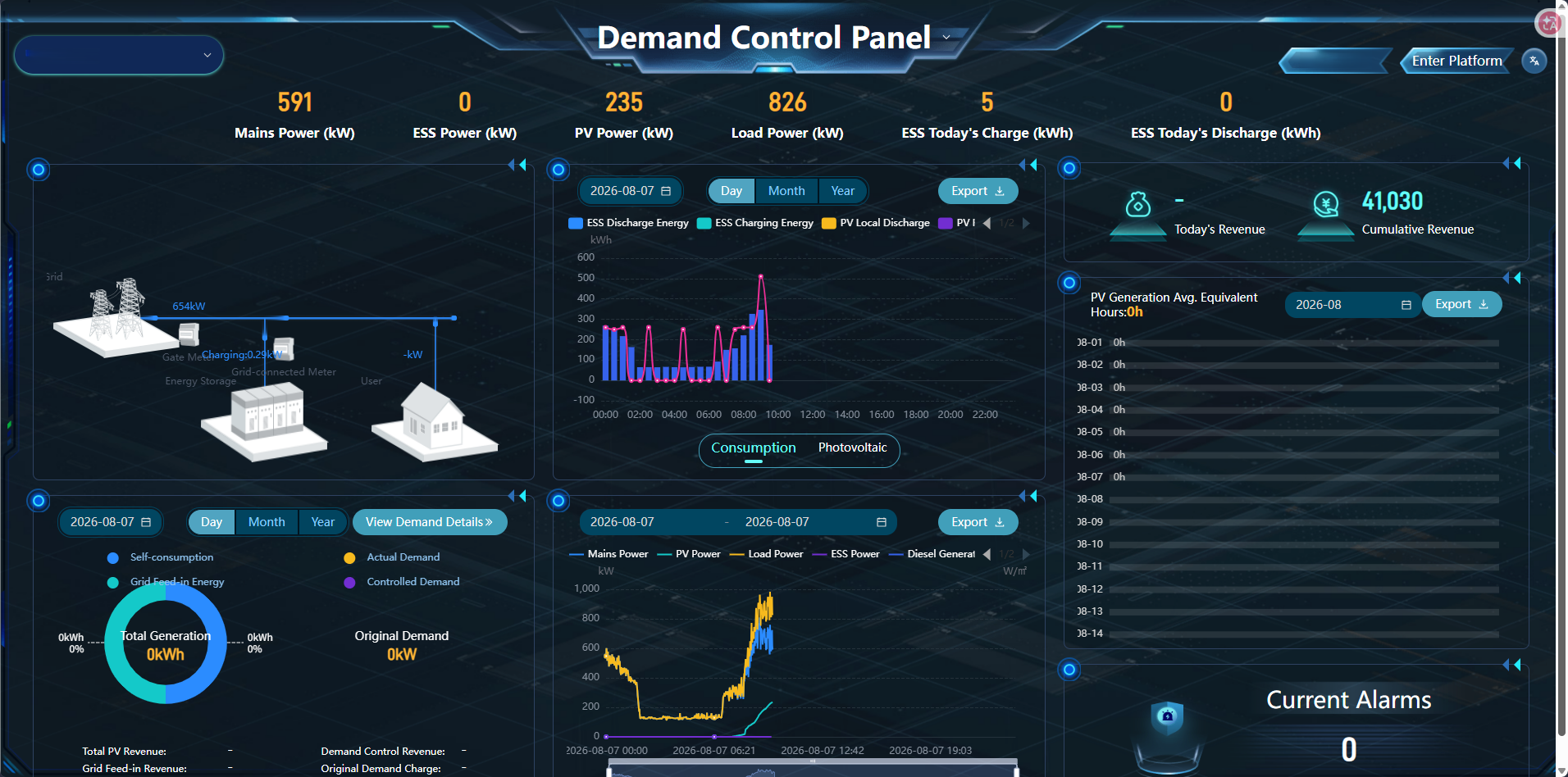
The EMS samples gateway power every second and continuously rolls up the current billing period's demand.
When the forecast demand would breach the threshold, the EMS orders storage to discharge just enough power. No more, no earlier.
Storage recharges at low power in safe windows, and charging is itself demand-constrained, so it never pushes demand higher.
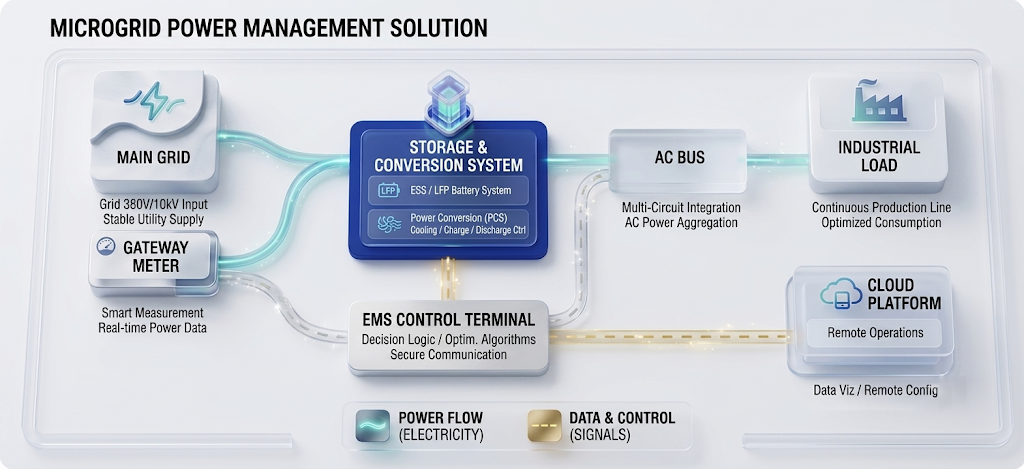
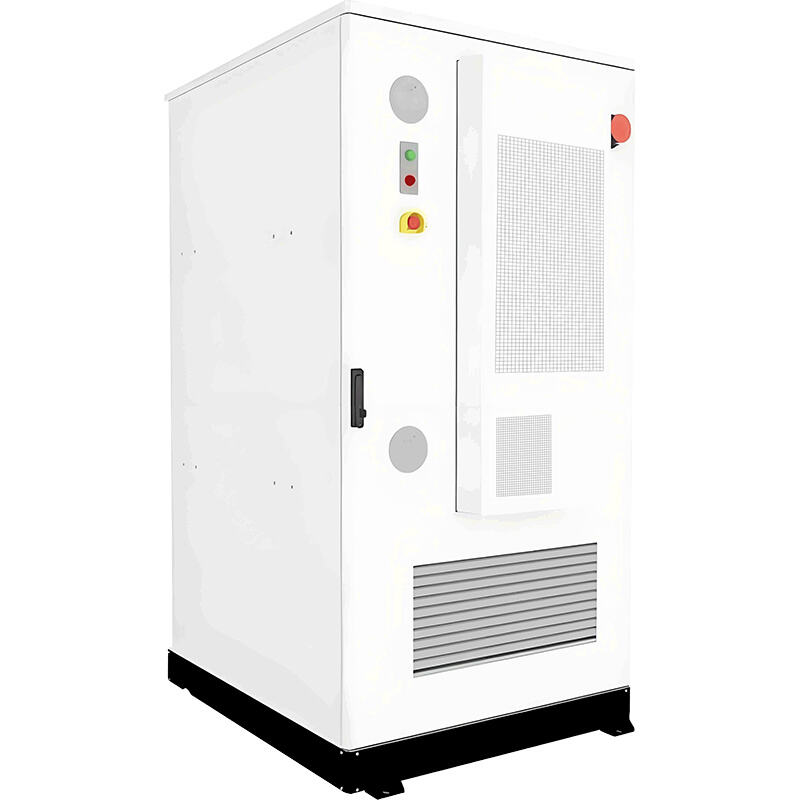
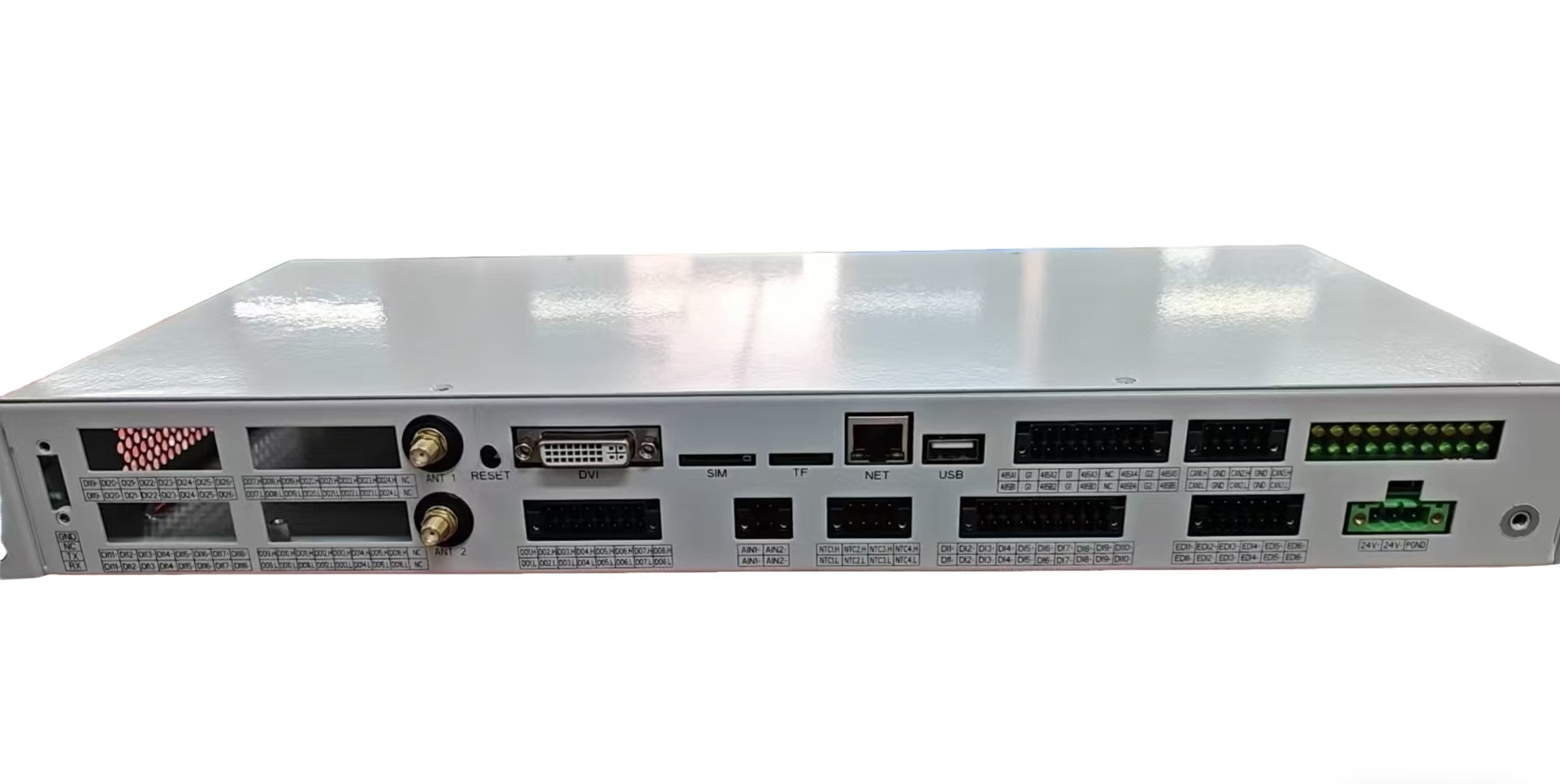
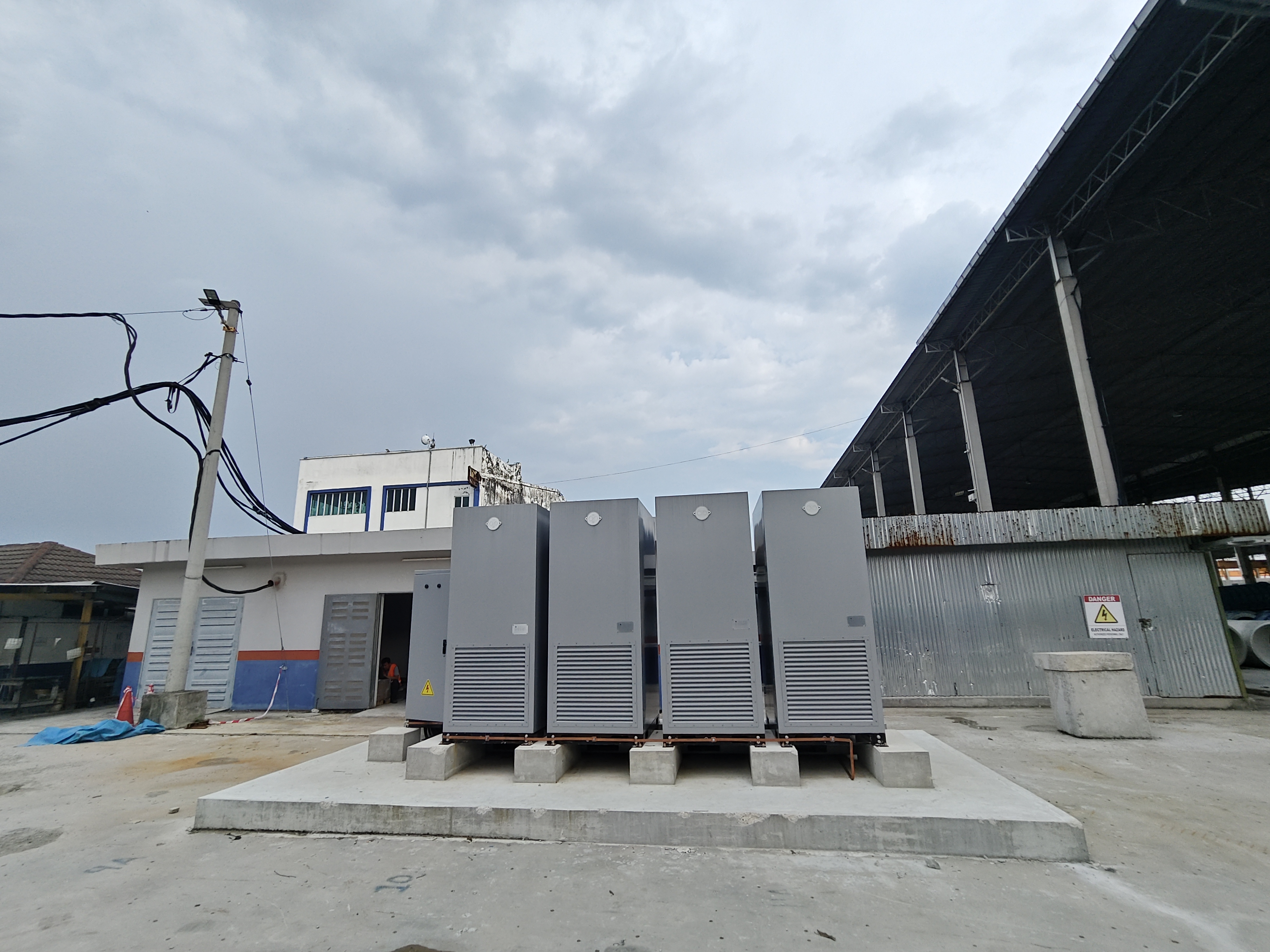
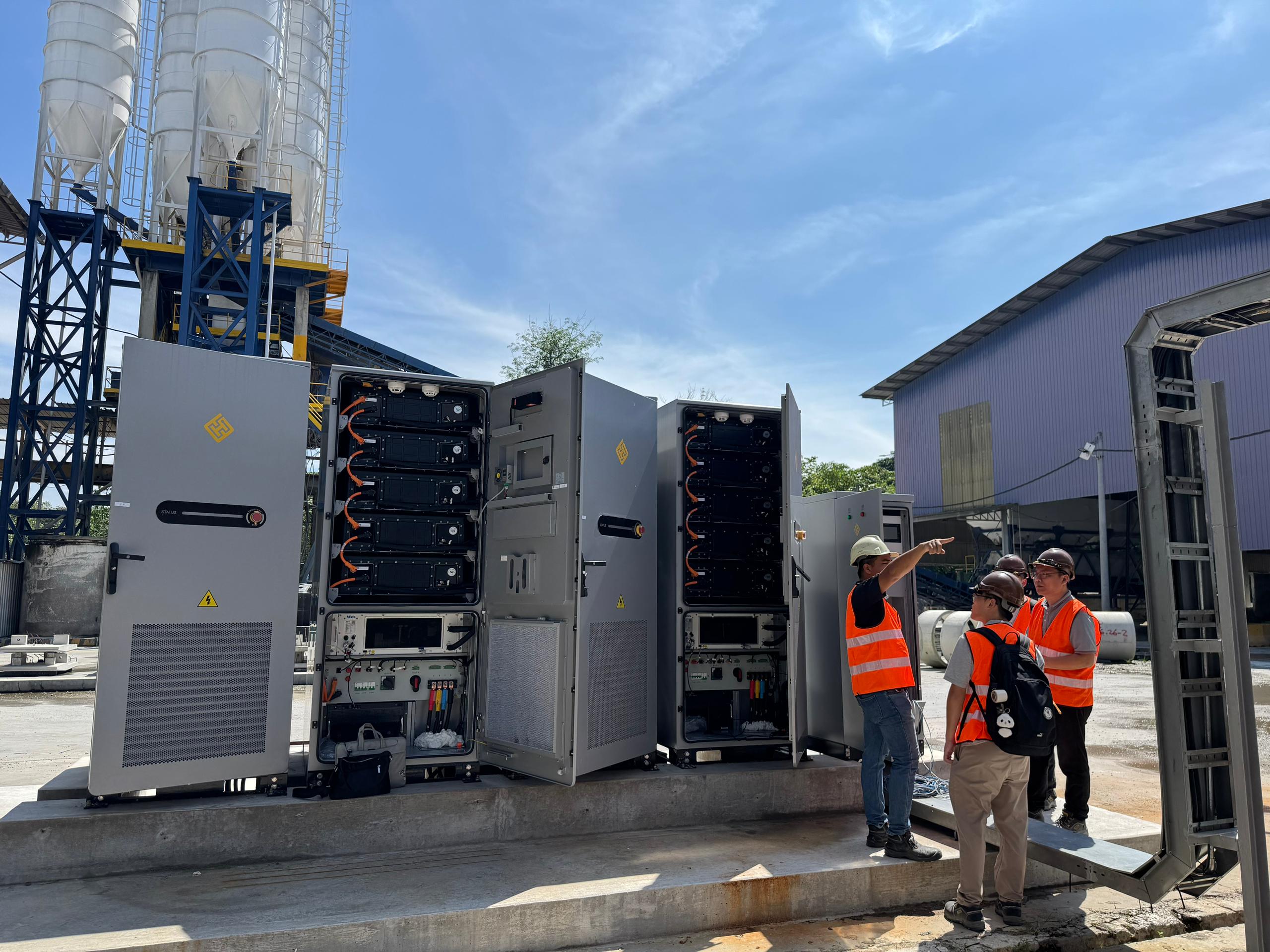
The storage cabinet buffers power and energy; the EMS decides when and how much to discharge; the cloud platform shows you the savings.
Precise discharge at peak, controlled recharge otherwise. Air-cooled is mature and low-cost; liquid-cooled offers tighter temperature control.
Decides when, at what power, and how much to discharge. The precision of these three parameters decides results and revenue.
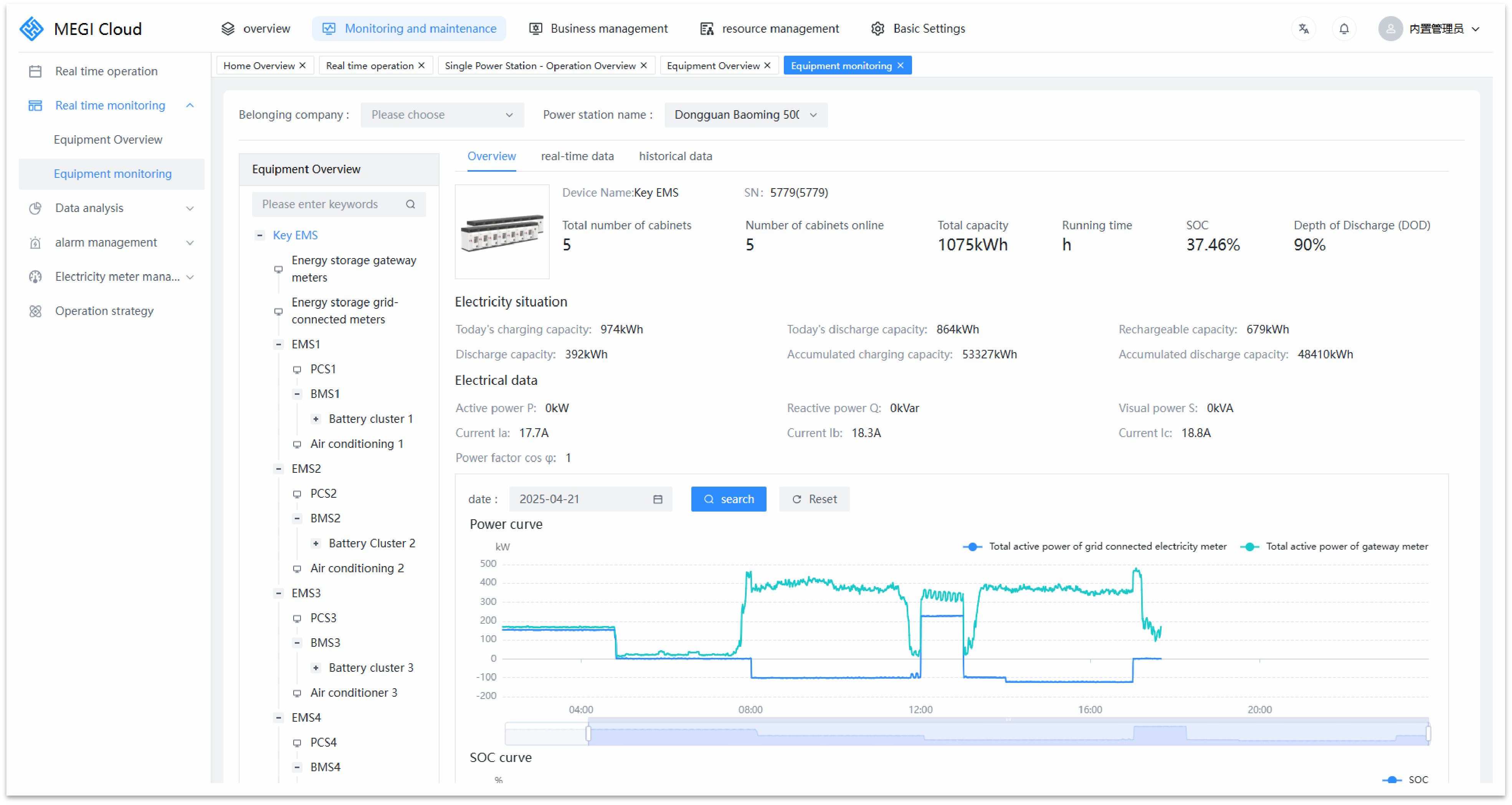
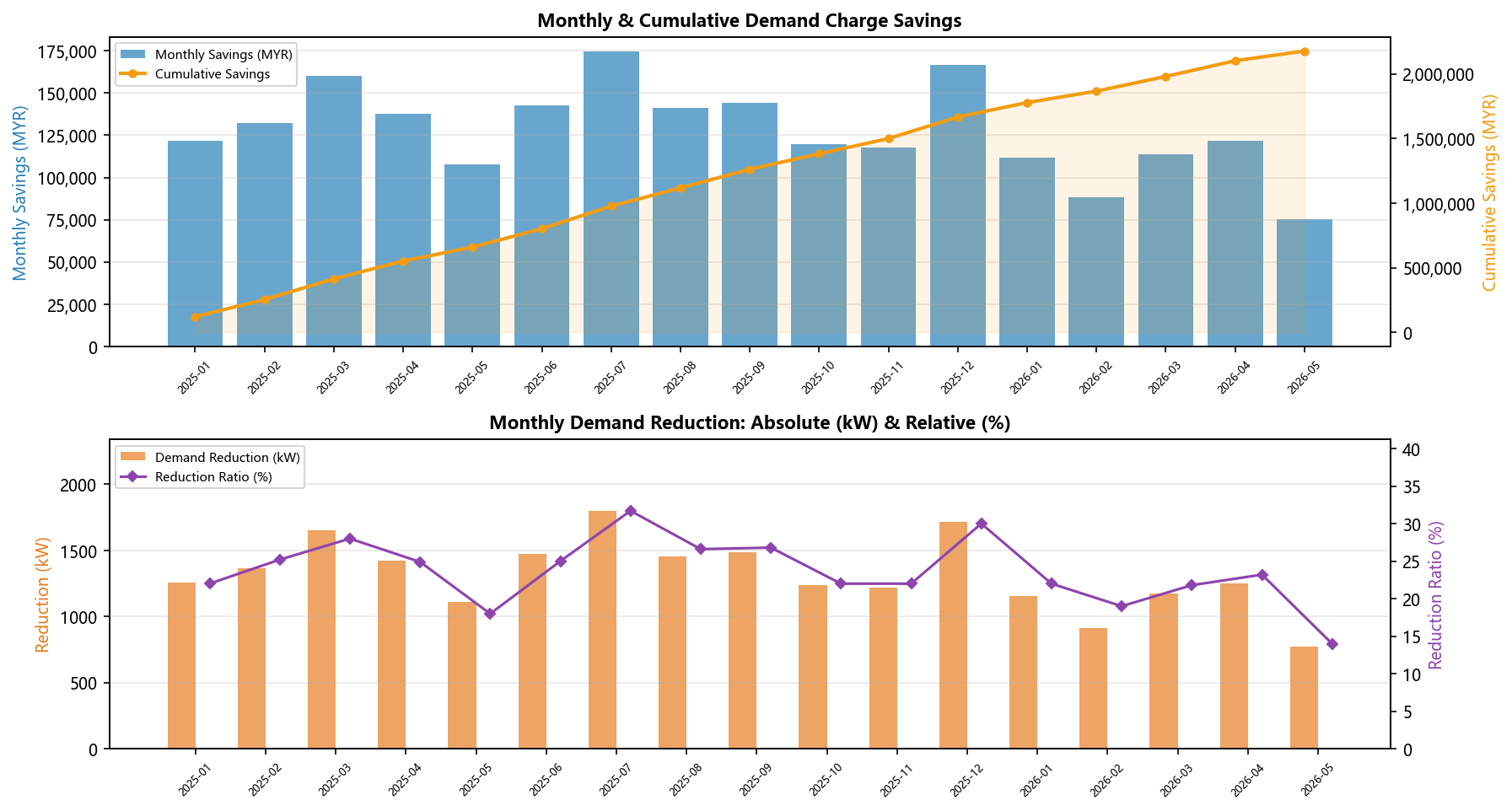
Demand control results are the KPI customers care about most. The platform calculates exactly how much was saved.
Modeling is based on real utility bills and load data, ensuring precise capacity sizing and quantifiable payback.
The benchmark case of industrial demand control. Four liquid-cooled cabinets cut demand from 974kW to 750kW, about 48-month payback.
Tell us about your grid capacity, charging goals, or scenario. We will recommend the optimal solar / storage / charging configuration — tailored, no obligation.