How Does a BESS Work?
If you are evaluating battery energy storage for a factory or commercial building, understanding how BESS works is the starting point. A Battery Energy Storage System (BESS) operates in three continuous stages: charging, storing, and discharging. An intelligent Energy Management System (EMS) decides when to charge and when to discharge based on electricity prices, solar generation, grid conditions, and your facility’s load profile.
Stage 1 — Charging the Battery
The BESS receives AC power from the grid or from on-site solar inverters. The Power Conversion System (PCS) converts AC to DC and charges the lithium battery modules. During this stage, the Battery Management System (BMS) monitors:
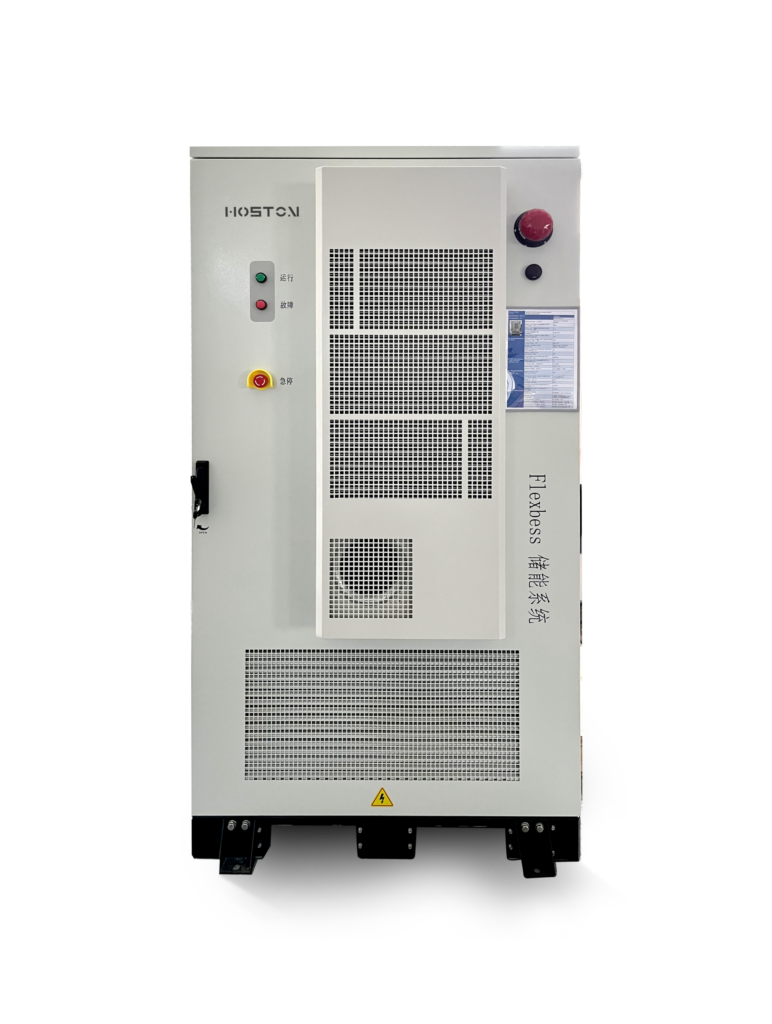
– Cell voltage and temperature
– State of Charge (SOC)
– Charge current limits
– Cell balancing status
For solar + BESS projects, charging happens during midday when solar output exceeds facility demand.
Stage 2 — Storing Energy
Once charged, the energy remains in the battery cells until the EMS calls for discharge. Modern industrial BESS uses Lithium Iron Phosphate (LFP) cells because they offer:
– High thermal stability
– Long cycle life (6,000+ cycles)
– Safe operation in containerized outdoor installations
The storage stage is not passive. The BMS continuously balances cells and the thermal management system maintains the optimal operating temperature.
Stage 3 — Discharging Energy
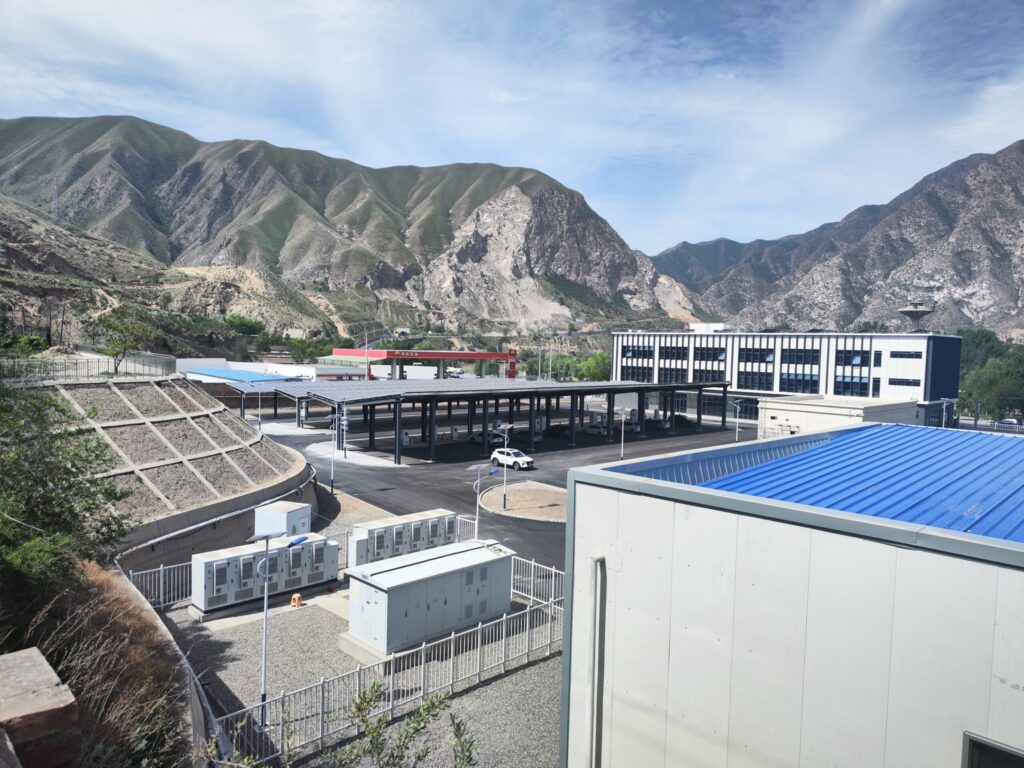
When facility demand peaks, grid prices spike, or the grid fails, the EMS signals the PCS to convert DC battery power back to AC and supply it to the facility.
Discharge triggers include:
– Time-of-use price arbitrage:
discharge during expensive peak hours
– Peak shaving: reduce maximum demand to lower demand charges
– Backup power: instant response during grid outages
– Solar self-consumption: use stored solar energy after sunset
What Controls the BESS?
The Energy Management System (EMS) is the brain of the BESS. It receives data from:
– Grid meters
– Solar inverters
– Facility load monitors
– Battery BMS
Based on pre-programmed logic or AI optimization, the EMS decides the optimal charge/discharge schedule. Advanced systems also support virtual power plant (VPP) participation and grid frequency regulation.
AC-Coupled vs DC-Coupled BESS
For most industrial retrofits, AC-coupled BESS is faster to install and does not disturb existing solar warranties.
Safety Systems in Industrial BESS
Industrial BESS must include:
– Fire detection and suppression
– Explosion venting for battery compartments
– Thermal management
– Arc fault and ground fault protection
These features are wh y certified industrial BESS cannot be compared to simple battery packs.
Get Turnkey Industrial BESS Solutions
Hoston Energy designs and manufactures AC-coupled and DC-coupled industrial BESS with integrated EMS, BMS, PCS, and fire safety systems.