What Is Peak Shaving?
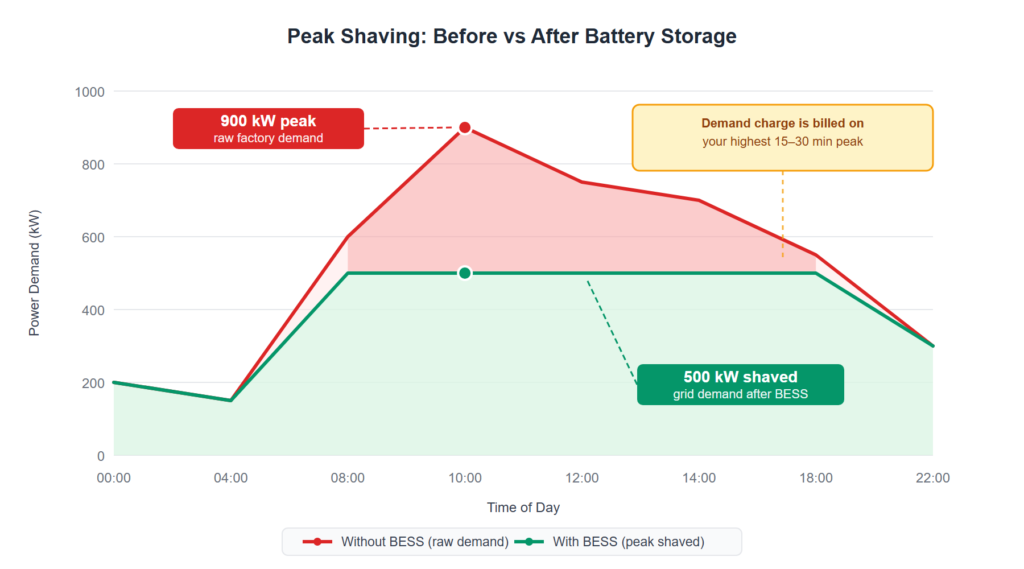
Peak shaving is the practice of reducing your facility’s highest short-term power demand from the grid. For industrial and commercial electricity users, peak demand is often the most expensive part of the monthly bill.
Electricity tariffs for large consumers usually include:
– Energy charges — based on total kWh consumed
– Demand charges — based on the highest kW draw in a 15-30 minute window
A single high-demand event — such as starting multiple machines at once — can set your demand charge for the entire month. Peak shaving prevents that.
How Does Peak Shaving Work?
There are three common methods:
1. Load Scheduling
Shift non-critical loads to off-peak hours. For example, schedule EV fleet charging or batch processes overnight.
2. On-Site Generation
Use diesel generators or gas turbines to cover peak loads. This works but has high fuel and maintenance costs.
3. Battery Energy Storage System (BESS)
A BESS discharges stored energy during peak demand windows, reducing the power drawn from the grid. This is the cleanest and most cost-effective method for many facilities.
Peak Shaving Example
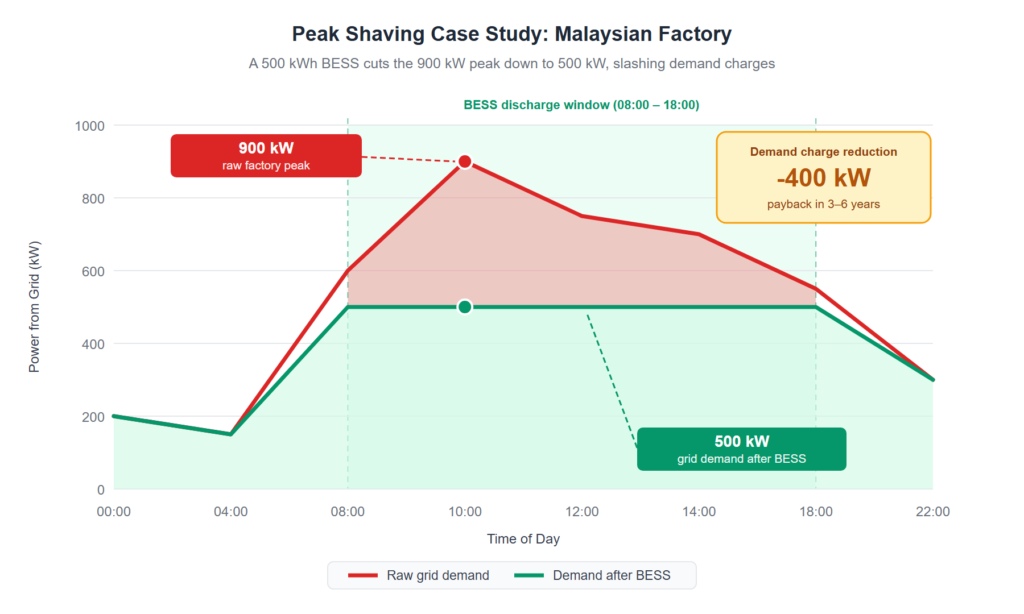
A factory in Malaysia has a normal load of 500 kW but occasionally hits 900 kW when multiple production lines start simultaneously. The utility charges demand based on the 900 kW peak.
By installing a 500 kWh BESS, the factory discharges 400 kW during the peak event. The grid only sees 500 kW. Demand charges drop significantly, often paying back the BESS investment in 3-6 years.
Peak Shaving vs Load Shifting vs Demand Response
– Peak shaving: Cuts the top of your demand curve using on-site storage
– Load shifting: Moves energy use from expensive to cheap time periods
– Demand response: Reduces load when the grid operator asks for it, often for payment
A modern BESS can do all three when paired with the right Energy Management System.
Why Peak Shaving Matters in Southeast Asia and Emerging Markets
In markets like Thailand, Malaysia, Indonesia, and the Philippines, industrial electricity tariffs often have high demand charges and unstable grid supply. Peak shaving with BESS gives factories:
– Lower monthly bills
– Protection from demand charge penalties
– More predictable energy costs
– Backup power during outages
FAQ
Q: What does peak shaving mean in battery terms?
A: It means using a battery to supply power during your facility’s highest demand periods, so you draw less from the grid.
Q: Can peak shaving work without solar?
A: Yes. A BESS can charge from off-peak grid power at night and discharge during peak hours.
Reduce Your Demand Charges with Hoston
Hoston Energy helps industrial buyers design peak shaving battery systems that reduce demand charges and improve power reliability.